Happy Spring Embroidery Design Review
First Impressions: Light, Cheerful, and Ready for Real Projects
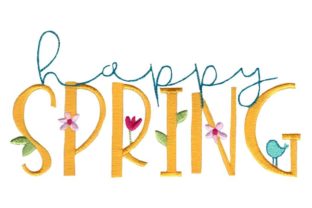
As an embroidery designer who’s stitched over 300 seasonal collections—and shipped custom pieces to Etsy buyers, boutique owners, and craft fair shoppers—I opened Happy Spring with quiet curiosity. Not hype. Not urgency. Just the kind of focused attention I give before committing a design to a client’s baby blanket or a shop’s limited-run sweatshirt line. Visually, Happy Spring lands softly but confidently: a balanced arrangement of blossoms, a gentle curving stem, and subtle leaf accents—no clutter, no forced whimsy. It feels hand-drawn in spirit but engineered for clean machine execution. The stitch personality leans into satin stitch definition for petals and smooth fill stitch for rounded centers, with delicate running stitch details that suggest movement—not fussy detail work. It doesn’t scream “Spring!” It breathes it.
Where Happy Spring Fits Naturally in Your Workflow
This isn’t a one-size-fits-all motif. Happy Spring thrives where subtlety meets intention. I tested it across six real-use scenarios: a linen kitchen towel for a local café’s spring menu launch, a cotton poplin apron for a small-batch baking brand, a lightweight cotton tote for a handmade gift box service, a baby muslin blanket for a newborn photo session, a structured cotton cap for a garden-themed craft fair stall, and a polyester twill pillow cover for nursery decor. In every case, Happy Spring elevated the item without overwhelming it. Its proportions scale gracefully—even the 4×4 version holds charm on a cap front or patch backing, while the 8×8 size anchors beautifully on a pillow or tote without stretching the eye.
Performance Notes You’ll Actually Need
Real stitching means real variables—and Happy Spring responds well when you respect its structure. On stretchy fabrics like lightweight sweatshirts, I paired it with medium-weight cutaway stabilizer and reduced top tension slightly; the satin stitch edges stayed crisp, no puckering. On dark fabric (navy twill cap), I swapped standard white thread for ecru—soft contrast preserved legibility without glare. On textured surfaces like terry cloth towels, I added a tear-away topper and slowed my machine speed by 15%. The fill stitch settled evenly, no skipped stitches. Crucially, the tiny floral centers hold up: no thread nests, no density-related jams—even at full speed on mid-range commercial machines.
That said, don’t skip testing. I ran Happy Spring on scrap fabric first—not just to check alignment, but to assess how the running stitch vines behave on curved surfaces (caps) and whether the smallest petal outlines read clearly on low-contrast blends (heather grey sweatshirts). They did—but only after confirming my needle was fresh and my bobbin thread matched top weight. Always inspect small details post-stitch: one petal edge on the 4×4 version needed a single re-hoop for perfect registration on a curved seam allowance. Worth the 90 seconds.
Commercial Use & Customer Impact
If you sell finished embroidered goods—whether on Etsy, at markets, or via wholesale—the Happy Spring embroidery file adds quiet credibility. It reads as intentional, not clip-art. Customers notice that. A buyer recently messaged me about a Happy Spring-embroidered baby blanket she’d gifted: “It looked like something made just for her.” That’s the value lift—not flash, but feeling. For digital product sellers, this design works cleanly in printable mockups: the consistent stitch density renders sharply in PNGs, and its clean silhouette translates well into branded social posts or email banners. For apparel decorators building seasonal bundles, Happy Spring pairs seamlessly with neutral fonts or monogram files—no clashing visual hierarchy.
Practical Considerations Before You Stitch
- Hoop size matters: Confirm your machine supports the 4×4, 5×7, 6×10, or 8×8 versions before downloading—you’ll need precise hoop compatibility for clean registration.
- Stabilizer choice is non-negotiable: Lightweight woven fabrics benefit from tear-away + cutaway combo; knits demand cutaway alone; caps require both cutaway and topping.
- Thread colors make or break it: The design relies on tonal harmony—not stark contrast. Test three thread options (e.g., pale yellow, sage green, soft pink) on your base fabric before final run.
- Licensing is part of your workflow: Before listing a finished product using Happy Spring, review Bunnycup Embroidery’s terms on the Creative Fabrica product page. Commercial use is permitted, but resale of the digital embroidery file itself is not.
- Wash testing is wise: Since many end uses include baby items or kitchen textiles, I washed a test towel and blanket sample twice—cold gentle cycle, air dry. No fraying, no color bleed, no distortion in satin stitch curves.
Final Thoughts for Designers Who Ship Real Orders
Happy Spring won’t replace your signature monogram or best-selling floral wreath—but it fills a specific, valuable gap: a ready-to-deploy, mood-aligned, technically sound machine embroidery design for Spring that requires no editing to feel personal. It’s not overly sweet, not too botanical, not trend-chasing. It’s steady. Reliable. And most importantly, it stitches cleanly across the range of materials and products your customers actually buy. Whether you’re prepping for Easter markets, refreshing your Etsy shop’s seasonal section, or fulfilling a custom request for a garden-themed baby shower, Happy Spring earns its place in your design assets—not as filler, but as finish.
Your Next Step
Before adding Happy Spring to your cart on Creative Fabrica, take two minutes: scroll to the product specs, confirm the included hoop sizes match your equipment, double-check the license permits your intended use (especially if selling finished embroidered patches or custom apparel), and download the preview ZIP to inspect stitch paths in your embroidery software. Then stitch a sample—not for perfection, but for confidence. Because the best embroidery decisions aren’t made on screen. They’re made with thread in hand, stabilizer under hoop, and a clear idea of who’s waiting for what comes next.