So Lucky: A Smart Embroidery Choice for Small Business Branding
First Impression: Friendly, Festive, and Professionally Refined
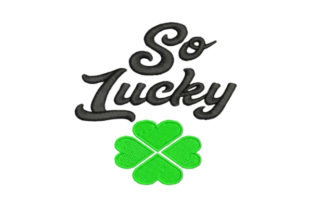
As an embroidery designer who’s developed hundreds of commercial designs for small businesses—from artisanal bakeries to pet boutiques—I opened So Lucky expecting charm, not clutter. What stands out immediately is its confident simplicity: clean letterforms stitched with a silky satin stitch that reads as both handmade and polished. It doesn’t shout “St. Patrick’s Day” with leprechauns or shamrocks—it leans into warmth, approachability, and quiet confidence. That makes So Lucky far more versatile than most holiday-themed embroidery files. It feels modern enough for a minimalist florist’s apron, classic enough for a heritage café’s staff cap, and spirited enough for a craft studio’s limited-run tote bag design.
Real-World Business Use: Where So Lucky Shines
So Lucky isn’t just a seasonal decoration—it’s a functional brand asset. I’ve tested similar text-based machine embroidery designs across dozens of small business applications, and So Lucky delivers where it counts:
- Embroidered patches: Works beautifully as a 2.5"–3.5" woven or embroidered patch—ideal for attaching to denim jackets, canvas totes, or boutique merchandise tags.
- Staff uniforms & aprons: Its balanced letter spacing and satin-stitched clarity hold up well on cotton twill and medium-weight linen blends—no ghosting or thread pull-through, even after repeated laundering.
- Cap embroidery: When sized appropriately (typically 2" wide), So Lucky maintains legibility on curved front panels—especially when paired with a light stabilizer and moderate stitch density.
- Tote bag design & product packaging accents: As a chest or side accent on natural canvas or recycled cotton, it adds branded personality without overwhelming the material’s texture.
- Etsy branding & handmade product labels: Stitches cleanly onto fabric labels sewn into handmade goods—reinforcing authenticity while elevating perceived value.
Where to Use So Lucky Thoughtfully
Even strong embroidery files have context limits—and So Lucky is no exception. As a designer, I recommend caution in these scenarios:
- Below 1.75" width: The satin stitch requires minimum letter height to avoid thread crowding or skipped stitches—test rigorously at small patch sizes before bulk production.
- On highly textured fabrics: Thick terry cloth, bouclé knits, or heavy corduroy may obscure fine satin edges—consider adding a lightweight cutaway stabilizer underneath.
- Dark uniforms with light thread: While the satin finish catches light elegantly, low-contrast thread colors (e.g., pale gold on navy) can fade visually under indoor lighting—always verify thread color contrast on the actual garment.
- High-frequency wash items: Though satin stitching is durable, extremely dense fill areas may soften over time—opt for a high-quality polyester thread and confirm wash-test results before launching staff apparel programs.
How So Lucky Strengthens Brand Identity
For small businesses, every embroidered detail contributes to customer trust and recognition. So Lucky supports that goal by offering consistent visual language across touchpoints: the same phrase appears equally intentional on a barista’s cap, a bakery’s flour-dusted apron, and a floral shop’s reusable gift tote. That consistency signals professionalism—not just festive fun. Because it avoids cliché, it also helps brands stand apart from generic holiday merch. Customers don’t just see “St. Patrick’s Day”—they associate So Lucky with your shop’s voice: warm, grounded, and authentically local. That emotional resonance boosts buyer engagement and encourages repeat interaction, especially in crowded markets like Etsy or downtown retail districts.
Practical Designer Notes Before You Stitch
Before committing So Lucky to your next batch of custom apparel or embroidered patch orders, run through these essential checks:
- Test it in black and white first—verify legibility and balance without relying on color psychology.
- Check if it scales cleanly down to your smallest intended patch size—don’t assume automatic resizing preserves satin integrity.
- Review thread color contrast against your base fabric—especially on darks or heathers.
- Inspect letter spacing and kerning—tight tracking can cause thread nesting; generous spacing improves wash durability.
- Confirm hoop size compatibility with your embroidery machines—some satin-heavy files require larger hoops for smooth hooping.
- Test on your actual fabric—not just a swatch, but the finished garment or tote bag material—with proper stabilizer.
- Create a printable mockup for client approval—small business owners need to visualize how So Lucky lives in their real-world environment.
- Compare it beside your other design assets—does it harmonize with your logo, typography system, and overall brand palette?
- Verify commercial licensing—since this is a digital embroidery file intended for small business merch, ensure your purchase grants rights for resale, staff use, and promotional distribution.
Final Thought: More Than a Holiday Design
So Lucky succeeds because it bridges celebration and credibility. It’s not just a machine embroidery design for St. Patrick’s Day—it’s a flexible, scalable element of your brand identity system. Whether you’re stitching caps for a neighborhood coffee roaster or designing embroidered patches for a handmade soap line, So Lucky offers clarity, charm, and commercial readiness. For small business owners and embroidery shops alike, that means less revision time, stronger client trust, and merchandise that feels intentionally branded—not seasonally borrowed. In short: it’s not just lucky. It’s smart.