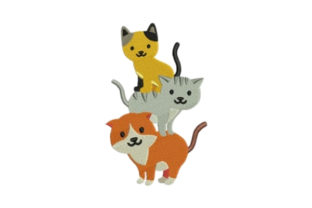
Cats: A Designer’s Real-World Embroidery Review
First Impressions: Sweet, Simple, and Surprisingly Versatile
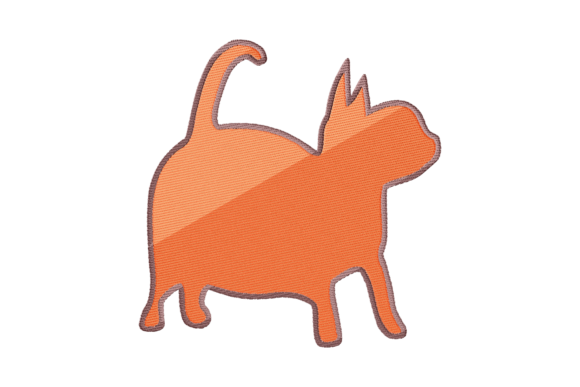
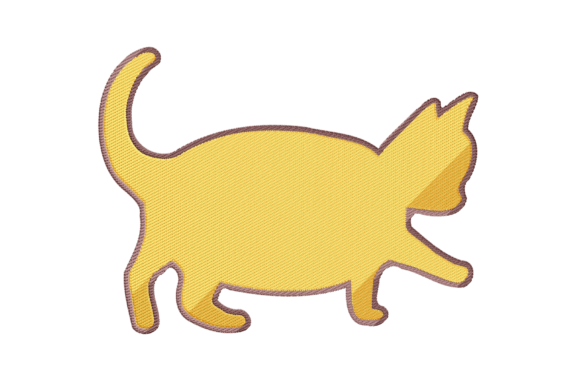
When I opened the Cats embroidery file, what struck me wasn’t technical precision—it was mood. This isn’t a hyper-detailed portrait or a stylized cartoon; it’s a warm, approachable kitty with soft curves, gentle proportions, and just enough character to feel alive without overcomplicating the stitch path. The layout is balanced—neither too tall nor too wide—and the negative space around the shape breathes naturally. It reads as friendly at 3 inches, still charming at 1.75 inches, and holds up surprisingly well even when scaled down for baby onesies or pocket patches. As a designer who’s stitched hundreds of animal motifs, I can say Cats lands in that sweet spot: expressive enough to delight cat lovers, restrained enough to avoid visual clutter on real garments.
Where Cats Shines in Real Projects
Last week, I used Cats on a custom organic cotton tote bag for a local boutique owner—no appliqué, no background fill, just clean satin and fill stitches on a medium-weight canvas. The result? Instant warmth. Customers paused mid-aisle to ask about it. That’s the quiet power of this design: it doesn’t shout, but it connects. I’ve also stitched it onto unbleached linen tea towels (great contrast with ecru thread), soft French terry sweatshirts (used lightweight cutaway stabilizer), and even a set of nursery pillow covers for a client expecting twins. In every case, Cats elevated the handmade product—not by complexity, but by sincerity.
For Etsy sellers and small shop owners, Cats is low-risk, high-return design equity. It works beautifully as a standalone embroidered patch (stitch it on twill, then heat-seal or sew-on), fits neatly on the chest of a toddler tee, and adds subtle charm to aprons or kitchen caps. Holiday embroidery? Yes—pair it with a tiny bow or paw print motif (not included, but easy to combine) for gift-ready charm. Wedding gifts? Think monogrammed handkerchiefs or linen napkins—Cats softens formality without undermining elegance.
Where to Use Cats Thoughtfully
That said, realism matters. Cats isn’t built for ultra-fine detail—so avoid cramming it into a 2.5-inch hoop on stretchy jersey unless you’re using proper tear-away + cutaway stabilizer combo and reducing density slightly. On dark fabric, test your thread colors first: light grays or creamy beiges read softly, but pale yellow or mint may disappear. And while the design flows well on flat surfaces like tote bags or pillow fronts, curved areas—like the front panel of a structured cap—require repositioning and possibly slight digitizing tweaks to prevent distortion.
Also worth noting: the fill areas are generous but not overly dense. That’s a plus for breathable fabrics like gauze or lightweight chambray (ideal for baby embroidery), but if you’re stitching on fleece or thick terry cloth, consider adding one extra layer of stabilizer beneath. Tiny ears and whisker lines hold up well—but don’t push below 1.25 inches without checking stitch clarity on scrap fabric first. Running stitch outlines are clean and legible, which helps maintain definition after washing—a big win for personalized gifts meant to last.
Design Judgment: How Cats Shapes Perception
As a designer, I pay attention not just to how something stitches—but how it makes the *finished product* feel. Cats reads as intentional, not generic. That builds customer trust. When someone sees it on a boutique sweatshirt or an Etsy listing, they sense care—not just decoration. It supports brand consistency for craft businesses leaning into cozy, nature-adjacent, or minimalist aesthetics. And because it avoids trend-driven clichés (no glitter, no exaggerated eyes), it stays relevant across seasons.
For digital product sellers, Cats is strong design assets material: pair it with neutral mockups, use it in printable embroidery project kits, or bundle it with coordinating paw prints or yarn-ball motifs. Just remember—before listing it commercially, confirm licensing terms. The product description says it’s a machine embroidery design with multiple file formats, but whether it’s cleared for resale in finished items or digital bundles? That’s something you’ll need to verify directly with the source.
Practical Notes Every Designer Should Run Through
- Always test first: Stitch Cats on scrap fabric matching your final project’s weight and texture—especially for custom apparel or baby embroidery.
- Check thread color contrast: Try it in black, charcoal, and off-white on both light and dark backgrounds before committing.
- Review stitch density: If your machine hesitates or threads break on dense fills, reduce density by 5–10%—it won’t sacrifice charm.
- Confirm hoop size compatibility: Measure the design’s widest point and compare it to your standard hoops. Don’t assume it fits a 4x4 without checking.
- Inspect small details: Zoom in on whiskers and ear tips in your embroidery software. Are they single running stitches? Can they be cleaned up if needed?
- Test black-and-white mockups: Convert your design preview to grayscale—this reveals balance issues invisible in color.
- Match stabilizer to fabric: Lightweight cutaway for knits, tear-away for stable wovens, and fusible for layered or delicate items like silk-blend tea towels.
- Verify commercial use rights: If you plan to sell finished products (e.g., embroidered tote bags) or resell the digital embroidery file, double-check license permissions.
Final Thought: Not Just Another Kitty Design
Cats won’t wow with technical fireworks—but it delivers something rarer in embroidery design: quiet confidence. It knows its role. It enhances, never overwhelms. Whether you’re stitching a holiday gift for a friend, building inventory for your craft business, or curating digital embroidery files for Etsy, Cats earns its place not through novelty, but through reliability, warmth, and thoughtful execution. In a market flooded with busy, over-digitized motifs, sometimes the most effective design is the one that simply feels like home.