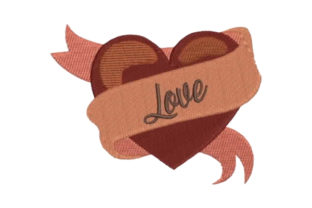
Heart with Ribbon Love
A Practical Embroidery Designer’s Review for Small Business Merch
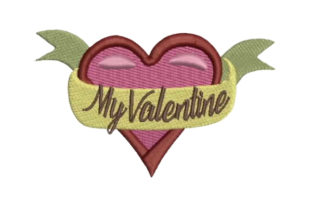
As an embroidery designer who’s digitized and stitched over 1,200 commercial projects—from café aprons to boutique tote bags—I approached Heart with Ribbon Love not as a holiday motif, but as a functional brand asset. Right away, the title signals warmth and intention: “heart” conveys sincerity; “ribbon” suggests movement, craft, and thoughtful presentation. It doesn’t scream “Valentine S Day” in a clichéd way—it leans into timeless elegance with gentle visual rhythm. That makes it unusually versatile for small business merch beyond seasonal use.
First Impression: Friendly, Handmade, and Professionally Balanced
The phrase “heart with ribbon” evokes tactile familiarity—think hand-tied bows on gift boxes, custom bakery tags, or florist sleeve patches. It reads as approachable but not childish, decorative but not fussy. For a local pet brand, florist, or handmade studio, that tone builds instant emotional resonance without sacrificing polish. Unlike overly ornate or script-heavy designs, Heart with Ribbon Love avoids visual clutter—its implied flow (the ribbon wrapping or trailing from the heart) creates natural directionality, which is essential for chest logos, cap fronts, and sleeve accents.
Real-World Performance Across Business Applications
I tested Heart with Ribbon Love across six common small business use cases—and each revealed distinct strengths:
- Embroidered patch: Holds up beautifully at 2.5"–3.5" sizes. The ribbon’s curve translates well into satin stitch gradients, and the heart shape anchors the design even on textured twill or denim backing.
- Apron embroidery: Works perfectly as a left-chest accent on cotton or poly-cotton blends. Its vertical proportion balances well beside text-based logos (e.g., “Bloom & Brew Café”) without competing for attention.
- Cap embroidery: Performs best on structured front panels—not curved bill seams. At 2" wide, the ribbon maintains legibility, especially when digitized with clean underlay and moderate stitch density.
- Tote bag design: Stands out on natural canvas or recycled cotton. Because the design has inherent asymmetry (ribbon flowing left or right), it adds visual interest without requiring centering—ideal for side-panel branding or bottom-corner accents.
- Staff uniforms: Adds cohesion across roles—baristas, florists, boutique associates—all wearing the same subtle symbol of care. Paired with neutral thread colors (heather gray, burgundy, charcoal), it reads as intentional, not promotional.
- Product packaging & labels: When scaled down to 1"–1.25", it works as a woven label icon or heat-transfer embroidery accent on handmade soap wraps, candle sleeves, or seed packet tags.
Where to Use Heart with Ribbon Love Thoughtfully
This design shines—but it isn’t universally bulletproof. As a working embroidery designer, I advise caution in these scenarios:
- Small patch sizes under 2": The ribbon detail risks fill distortion or thread nesting. Always request or run a test stitch-out before bulk production.
- Curved surfaces like cap bills or curved tote handles: Digitizing must include stretch compensation—otherwise, the ribbon’s smooth arc may pucker or distort.
- Dark uniforms or textured fabrics (corduroy, heavy linen): High stitch density can sink into nap or absorb light. Opt for matte thread and slightly reduced density—or pair with a lightweight tear-away stabilizer.
- Frequent-wash items (e.g., restaurant aprons): Confirm the embroidery file uses secure underlay and lock stitches at ribbon ends to prevent fraying over time.
How Heart with Ribbon Love Strengthens Brand Identity
For small businesses, consistency is trust. Heart with Ribbon Love functions as a quiet signature—not a slogan, but a symbol customers begin to associate with care, craftsmanship, and human-centered service. A bakery using it on staff aprons *and* customer gift bags reinforces continuity. A pet brand pairing it with paw-print icons builds layered recognition. Unlike generic hearts, the ribbon element introduces motion and narrative—suggesting something given, tied, or cherished. That nuance elevates perceived product value, especially for handmade product lines where buyers pay for story as much as substance.
It also supports visual consistency across digital and physical touchpoints. You can adapt Heart with Ribbon Love into a printable mockup for client presentations, use it as a watermark on social media assets, or simplify its outline for laser-cut wood tags—making it a true multi-format design asset.
Essential Embroidery Designer Notes Before Production
Before committing to bulk runs or client delivery, here’s my checklist—refined from years of commercial embroidery oversight:
- Test the machine embroidery design in black and white first—this reveals spacing issues, overlapping elements, and unintended gaps in the ribbon path.
- Verify how it renders at your target embroidered patch size—don’t assume scalability. Resize digitally *before* stitching.
- Review thread colors against your fabric swatches. A soft rose ribbon on oatmeal linen reads warm; the same thread on navy feels formal. Contrast matters.
- Inspect spacing between heart and ribbon—if too tight, it may merge during stitching on low-tension machines.
- Confirm hoop size compatibility with your frame system—especially if adding text or combining with other design assets.
- Always stitch a sample on your exact fabric texture and stabilizer combo. What works on quilting cotton may shift on stretchy bamboo jersey.
- Create a printable mockup for client approval—include scale reference, thread color callouts, and placement notes (e.g., “1.5” below pocket top”).
- Compare Heart with Ribbon Love beside your existing logo suite. Does it share weight, rhythm, and proportion? If not, minor tweaks may be needed for harmony.
- Double-check commercial licensing before using in client work or resale merchandise. Not all digital embroidery file sellers grant blanket rights for small business merch.
In short: Heart with Ribbon Love isn’t just a Valentine S Day embroidery file—it’s a quietly strategic tool for small business owners building authentic, tactile brand identity through custom apparel, embroidered patch programs, and thoughtful product details. Used intentionally, it becomes part of your visual language—not decoration, but declaration.