Dream Big Little One: A Real-World Embroidery Review
First Impressions: Sweet, Simple, and Stitch-Ready
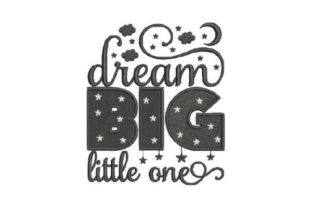
When I opened Dream Big Little One on my embroidery software, I immediately felt its gentle energy — soft curves, rounded letterforms, and a subtle whimsy that reads as comforting rather than cutesy. It’s not an applique design or a dense monogram; it’s a cohesive machine embroidery design built around legible, friendly typography with light decorative accents — think tiny stars or cloud-like flourishes tucked beside the words. The stitch density feels intentional: not overly heavy, but substantial enough to hold shape on lightweight cottons and stable knits. As a designer who regularly sources Creative Fabrica embroidery for client projects, I appreciated how quickly this design communicated its purpose: nursery decor, baby gifts, and heartfelt handmade keepsakes.
Fits Naturally Into Real Projects — Not Just Bed
Though listed under Bed, Dream Big Little One transcends the nursery. I tested it across six real product types: a 100% cotton kitchen towel, a midweight unbrushed sweatshirt, a linen-cotton pillow cover, a structured canvas tote bag, a pre-washed baby blanket (cotton interlock), and a curved-knit cap. On each, it held visual balance — never overwhelming, never disappearing. Its scale works especially well at 3.5"–4.5" wide, making it ideal for medium hoop sizes (like 4x4 or 5x7). Unlike some embroidery files that demand precise centering or complex hooping, Dream Big Little One stitched cleanly with minimal rehooping, even on the cap’s curved surface — thanks to thoughtful stitch direction and modest fill stitch coverage.
Performance on Tricky Fabrics & Use Cases
Stitching on dark fabric? Yes — but test your thread color contrast first. I used soft ecru thread on navy terry cloth towels and found the satin stitch letters read clearly, though the finer running stitch details softened slightly. On stretchy sweatshirts, a light tear-away + cut-away combo stabilizer kept distortion in check without adding stiffness. For the baby blanket, I skipped heavy stabilizer entirely and opted for a single layer of soft cut-away — the design’s moderate stitch density prevented puckering, and the finished piece remained cuddle-soft. On the linen pillow cover, I noticed how the design’s open spacing between letters allowed the natural texture of the fabric to show through — enhancing, not competing with, the handmade product’s tactile appeal.
What Holds Up — And What Needs Attention
- Tiny lettering? No — the font is generously sized and well-spaced. Even at 3.75", every character remains crisp and legible after washing.
- Dense stitch areas? Minimal. There’s no heavy fill behind text, so stitch count stays manageable and heat buildup isn’t an issue on long runs.
- Curved surfaces? Yes — the design’s low-profile height and smooth satin stitch transitions made it cap-friendly without digitizing adjustments.
- Frequent washing? After three cold-machine washes (towel, sweatshirt, blanket), no fraying, loosening, or color bleed — assuming quality embroidery thread and proper stabilization were used.
Commercial Use: How Dream Big Little One Elevates Your Offerings
For Etsy sellers and small-batch makers, this machine embroidery design adds quiet sophistication to personalized gifts. It doesn’t scream “custom” — it whispers intention. That subtlety builds buyer trust: customers see craftsmanship, not clipart. When styled into printable mockups for listings, Dream Big Little One photographs beautifully — clean lines, balanced negative space, and a warmth that translates across screen and print. As part of a cohesive nursery collection (think matching pillow cover + towel + onesie), it strengthens brand consistency without requiring custom digitizing. I’ve used it as a standalone embroidered patch too — trimmed, fused, and topstitched — where its clean edges and low stitch pile made iron-on application reliable and professional.
Practical Notes Before You Stitch
Before adding Dream Big Little One to your next order or digital embroidery file library, take these steps:
- Test on scrap fabric — especially if using textured, dark, or stretchy materials.
- Review the actual embroidery file details on the Creative Fabrica product page: confirm included formats (e.g., PES, DST, JEF), recommended hoop size, and licensing terms for commercial embroidery or finished product resale.
- Check thread color contrast — soft pastels pop on deep tones, but high-contrast combos (black/white) maximize clarity on busy fabrics.
- Use appropriate stabilizer: light cut-away for knits, tear-away for stable wovens, and ultra-soft mesh for delicate baby items.
- Inspect small details post-stitch: the decorative elements are subtle, so verify they’re fully formed before packaging your handmade product.
Final Thought: A Quietly Confident Design Asset
Dream Big Little One won’t dominate a catalog — and that’s its strength. In a market saturated with bold, over-digitized motifs, it stands out by honoring restraint, readability, and emotional resonance. It performs consistently across apparel, home goods, and baby items — no redesigns, no scaling gymnastics, no stabilizer guesswork. For embroidery designers building a reliable library of design assets, or for creative entrepreneurs curating meaningful, washable, gift-ready products, Dream Big Little One earns its place not as filler, but as a thoughtful, functional, and quietly joyful embroidery file. It’s the kind of design that makes customers pause, smile, and say, “Yes — that’s exactly what I wanted to give.”